
Home care workflow guide for families in New York 2026

Navigating home care for elderly relatives in New York City and Westchester can feel overwhelming. Between state licensing rules, caregiver coordination, and mandatory deadlines like the CDPAP transition to PPL by March 28, 2025, families often struggle to maintain uninterrupted, quality care. This guide walks you through each step of the home care workflow, from understanding regulatory requirements to selecting licensed agencies and ensuring ongoing compliance, so your loved ones receive safe, personalized support at home.
Table of Contents
Key takeaways
Point | Details |
State licensing compliance | New York home care agencies must hold valid LHCSA licenses and submit precise documentation for administrative amendments. |
CDPAP transition mandate | CDPAP recipients transitioned to PPL by March 28, 2025 to ensure continued Medicaid services. |
Acquiring existing agencies | Buying an established LHCSA bypasses moratorium hurdles and public need assessments. |
Administrative amendment rigor | Incomplete requests are rejected; agencies must follow the official Attachment A checklist exactly. |
Service area expansion limits | County expansion approvals require fewer than five agencies serving that area. |
Understand the home care workflow challenges in New York
Families across Brooklyn, Queens, Manhattan, the Bronx, Staten Island, and Westchester frequently encounter confusion when coordinating in-home care. New York’s regulatory landscape demands strict adherence to state licensing rules, timely transitions to new fiscal intermediaries, and ongoing documentation.
One of the most immediate challenges is the CDPAP transition to PPL by March 28, 2025. Missing this deadline can disrupt Medicaid reimbursement and leave caregivers unpaid. Many families learned about the mandate late, causing scrambles to re-enroll and update payroll details.
Beyond deadlines, understanding agency licensing can be daunting. Licensed Home Care Services Agencies (LHCSAs) operate under strict New York State Department of Health oversight, requiring multiple amendments for changes in ownership, service areas, or administrative details. Navigating these amendments without expert guidance often leads to rejected applications and delays in care delivery.
Caregiver coordination adds another layer of complexity. Families must verify caregiver credentials, match skill sets to medical needs, and maintain clear communication channels. Without a structured workflow, scheduling conflicts, medication errors, and lapses in personal care assistance become common pitfalls.
“The transition to PPL was stressful because we didn’t know what forms to complete. Our caregiver almost missed a paycheck.”
To manage these challenges effectively, families should:
Research state licensing requirements and deadlines early
Confirm agency compliance with Department of Health standards
Establish clear communication protocols with caregivers and agencies
Document all care changes and amendments promptly
For deeper insights into setting up home care workflow guides, families can access resources that simplify the regulatory maze and connect them with vetted providers.
Prepare for home care: requirements and documentation
Successful home care begins with thorough preparation. Whether you’re a family seeking services or an agency expanding operations, understanding documentation standards and licensing prerequisites prevents costly delays.
Agencies must hold a valid LHCSA license approved by the New York State Department of Health. This license authorizes agencies to provide skilled nursing, personal care, and home health aide services. Any administrative change, such as a new administrator, office relocation, or service area expansion, requires a formal amendment submission.
The amendment process is strict. Agencies must submit a signed letter with Attachment A checklist and all supporting documents to the designated Department of Health email address. Incomplete submissions are rejected outright, forcing agencies to restart the process and delaying service availability.
Key documents families should review before engaging an agency include:
Proof of current LHCSA licensure and accreditation status
Caregiver certifications and background check records
Service agreements outlining care plans, schedules, and costs
Emergency contact protocols and incident reporting procedures
Families using Consumer Directed Personal Assistance Program (CDPAP) services face an additional requirement. The transition to PPL by March 28, 2025 means recipients and caregivers must re-enroll through the statewide fiscal intermediary to maintain Medicaid reimbursement. Missing this deadline disrupts payment cycles and can leave caregivers without compensation.
Pro Tip: Create a master folder (digital or physical) with copies of all licensing documents, care agreements, and caregiver credentials. Update it quarterly to ensure compliance and avoid scrambling during audits or service changes.
Document Type | Purpose | Renewal Frequency |
LHCSA License | Authorizes agency operations | Annual |
Caregiver Certification | Verifies training and skills | Biennial |
Service Agreement | Defines care scope and costs | Per engagement |
Emergency Contacts | Enables rapid incident response | Quarterly review |
For families starting home care services, these preparatory steps build a solid foundation for reliable, compliant care delivery.
Executing the home care workflow: selecting and managing care
Once documentation is in order, the next phase is selecting a qualified agency and managing ongoing care. This stage involves evaluating options, coordinating caregiver assignments, and maintaining open communication.
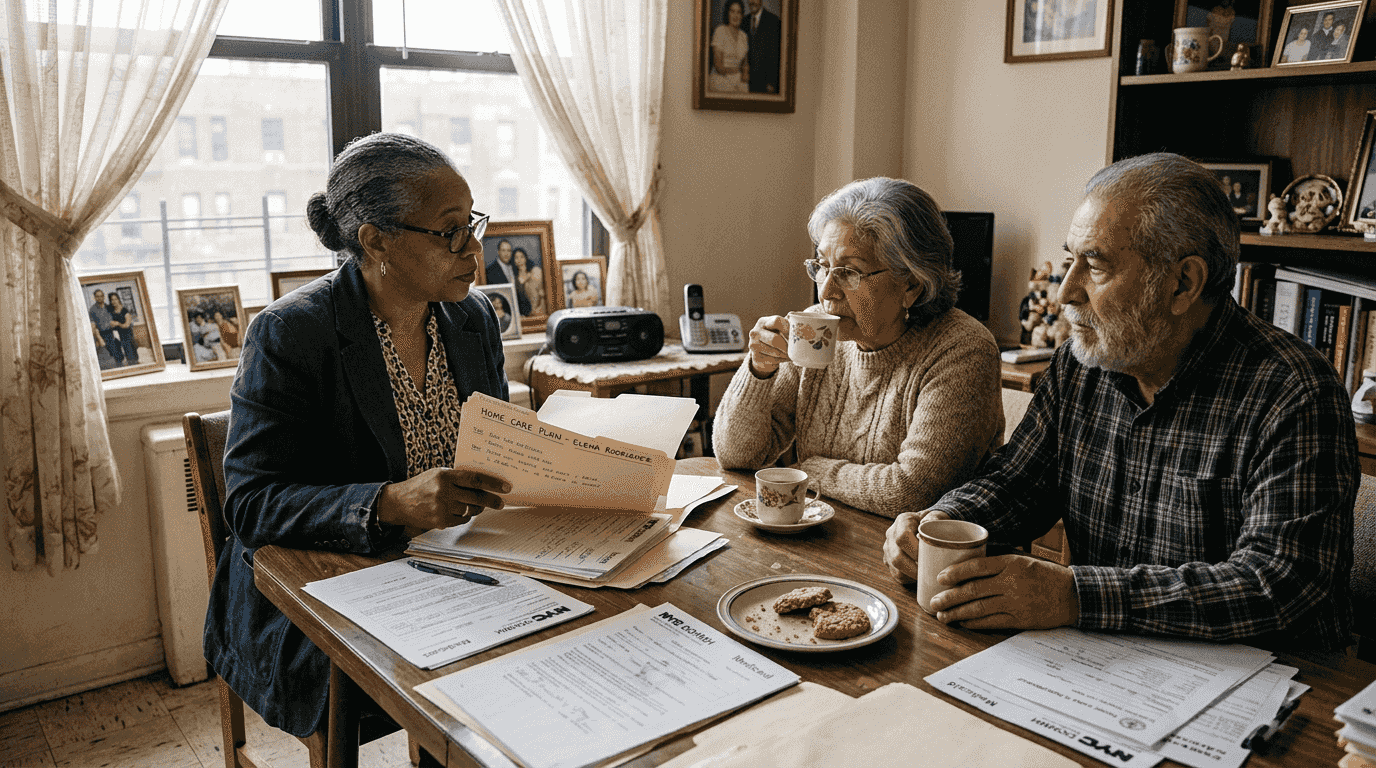
Acquiring an existing LHCSA simplifies the start-up process significantly. Established agencies have active patient censuses, trained staff, and exemptions from public need assessments that new applicants must pass. For families, this means faster access to care without waiting for new licenses to be approved, which can take months or even years due to moratoriums.
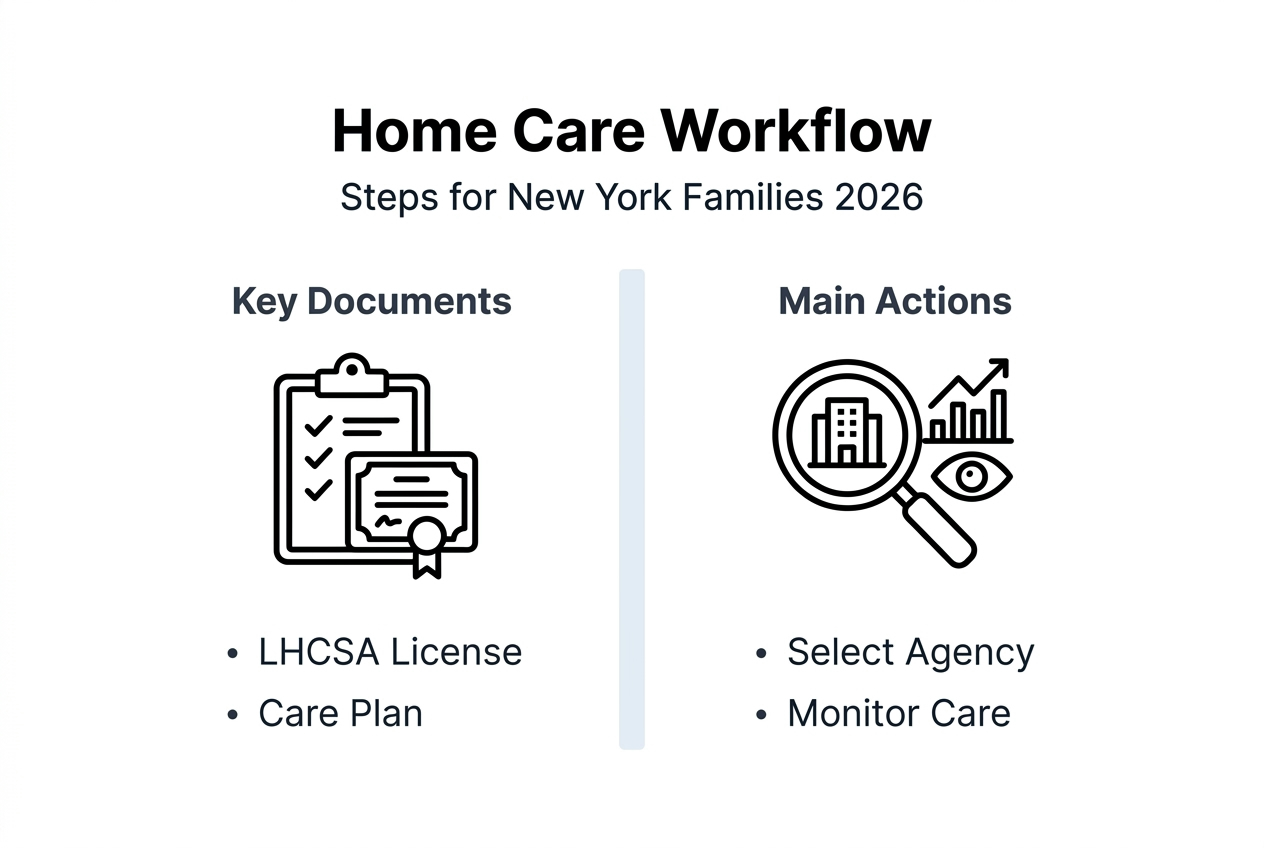
The step-by-step workflow for families includes:
Conduct initial assessments to identify medical, mobility, and personal care needs
Request agency consultations to compare service offerings, caregiver qualifications, and pricing
Review licensing and compliance records to ensure agencies meet state standards
Assign caregivers based on skill match, language preferences, and schedule compatibility
Establish care plans that document daily routines, medication schedules, and emergency protocols
Schedule regular check-ins to monitor care quality and adjust plans as needs evolve
Families should verify that agencies comply with Department of Health licensing requirements throughout the engagement. This includes confirming that caregivers hold current certifications, background checks are up to date, and agencies maintain appropriate liability insurance.
Key coordination tasks include:
Scheduling caregiver shifts and managing time-off requests
Tracking medication adherence and medical appointments
Documenting care activities and any incidents or changes in condition
Communicating regularly with family members and healthcare providers
For agencies expanding their service areas or making ownership changes, the home care acquisition process requires Department of Health approval. Buyers must demonstrate financial stability, administrative competence, and adherence to all licensing standards. This due diligence protects both the agency’s reputation and the families they serve.
Effective care management also means anticipating changes. Seniors’ needs often evolve, requiring adjustments to care plans, additional services, or different caregiver skill sets. By maintaining flexible workflows and clear documentation, families can adapt quickly without service interruptions.
Verify and maintain quality: monitoring and common pitfalls
Quality assurance is critical for safe, reliable home care. Families must actively monitor agency performance, recognize warning signs, and address issues promptly to ensure loved ones receive the best possible support.
Start by verifying that your chosen agency holds an active LHCSA license. The New York State Department of Health maintains public records of licensed agencies, allowing families to confirm authorization status and review any disciplinary actions or complaints.
Common pitfalls families encounter include:
Incomplete or missing paperwork that delays service initiation
Missed deadlines for amendments or transitions, such as the CDPAP changeover
Poor communication between caregivers, families, and agencies
Inadequate caregiver training or credential verification
Lack of backup caregivers for emergencies or scheduled time off
To avoid these issues, establish clear communication channels from day one. Designate a primary family contact who coordinates with the agency and caregivers. Schedule regular check-ins to review care plans, discuss any concerns, and document progress.
Pro Tip: Keep a care journal that logs daily activities, medication schedules, and any incidents or changes in your loved one’s condition. This record provides valuable context during care plan reviews and helps identify patterns that may require adjustments.
Monitoring quality also means comparing agency options. Not all providers offer the same level of service, caregiver training, or responsiveness. Consider factors such as:
Years of experience serving New York City and Westchester families
Caregiver-to-patient ratios and availability of multilingual staff
Accreditation status (Joint Commission, CHAP, etc.)
Client testimonials and online reviews
Flexibility in adjusting care plans as needs change
Quality Indicator | What to Check | Red Flags |
Licensing | Active LHCSA status | Expired or pending licenses |
Caregiver Credentials | Current certifications | Overdue renewals |
Communication | Prompt responses | Delayed callbacks |
Care Continuity | Consistent caregiver assignments | Frequent changes |
Families should also be aware of service area restrictions. County expansion approvals require fewer than five agencies already serving that area. If your family lives in a less-populated county, confirm that your chosen agency holds authorization for your location.
“We didn’t realize our agency wasn’t approved for our county until the first scheduled visit was canceled. Always check service area coverage upfront.”
For additional support navigating supportive home services and ensuring compliance, families can consult with specialists who understand New York’s unique regulatory landscape. Understanding agency service area limits can also help set realistic expectations.
Discover compassionate home care services in New York
Navigating New York’s home care workflows is complex, but you don’t have to do it alone. Friendly Home Care brings years of expertise to families throughout Brooklyn, Queens, Manhattan, the Bronx, Staten Island, and Westchester County. Our licensed caregivers provide tailored medical and personal assistance designed to help your loved ones age safely and comfortably at home. We handle the regulatory details, from licensing compliance to caregiver coordination, so you can focus on what matters most: your family’s wellbeing. Explore our personalized home health services to see how we simplify the care journey, or visit Friendly Home Care to schedule a consultation today.
FAQ
What is the deadline for CDPAP recipient transition to PPL?
The CDPAP transition deadline to Public Partnership, LLC (PPL) was March 28, 2025. Recipients and caregivers who missed this date faced disruptions in Medicaid reimbursement. Families should confirm enrollment status with their fiscal intermediary to ensure ongoing payment continuity.
How can families check if a home care agency is licensed in New York?
Families can verify LHCSA licenses through the New York State Department of Health website. The database includes active licenses, service areas, and any disciplinary actions. This step ensures that agencies meet state safety, staffing, and training standards before engaging their services.
Why is acquiring an existing LHCSA often easier than obtaining a new license?
Existing LHCSAs offer an active license, patient volume, and exemption from public need assessments, making acquisition faster and less complex. New licenses face moratorium restrictions and must demonstrate unmet public need, which can take years to approve. Buying an established agency streamlines entry into the home care market.
What documentation is required for administrative licensure amendments in New York?
Agencies must submit a signed letter with Attachment A checklist and all supporting documents to the designated NYS Department of Health email address. Incomplete requests are rejected immediately, so precision and thoroughness are essential. Common amendments include changes in ownership, service area expansions, and administrative updates.
Recommended