
Why seniors need in-home care in NYC to stay independent

Why seniors need in-home care in NYC to stay independent
New York City’s senior population is exploding. By 2030, 19% to 25% of each borough will be age 60 or older, yet many families still assume nursing homes are the only safe option for aging loved ones. That’s a costly misconception. Most seniors want to remain in their own homes, and in-home care makes that possible while delivering personalized support, preserving independence, and often costing less than institutional care. This guide explains why in-home care is essential for NYC seniors who value safety, dignity, and the comfort of familiar surroundings.
Table of Contents
Key takeaways
Point | Details |
Growing senior population | Between 19% and 25% of NYC borough residents will be age 60 or over by 2030, creating urgent care demand. |
Aging in place preference | Most older adults prefer to stay in their own homes rather than move to nursing facilities. |
Diverse care needs | Over 60% of NYC seniors identify as non-white, requiring culturally competent, multilingual caregivers. |
Cost advantages | Hourly in-home care often costs less than nursing home monthly fees, especially with Medicaid support. |
Financial assistance available | Medicaid covers long-term in-home care for eligible New Yorkers, easing financial strain on families. |
Understanding New York City’s aging population and care needs
New York City is experiencing a demographic transformation. By 2030, 19% to 25% of each borough’s population will be age 60 or older, placing unprecedented demand on care services. This isn’t just about numbers. It’s about real families in Brooklyn, Queens, Manhattan, the Bronx, and Staten Island searching for safe, dignified solutions for aging parents and grandparents.
The diversity of NYC’s senior population adds complexity. Over 60% of older adults identify as non-white, spanning dozens of languages, cultures, and traditions. Effective care must respect these differences. A caregiver who speaks Mandarin, Spanish, Russian, or Haitian Creole can communicate clearly, understand cultural preferences, and build trust with seniors and their families.
Meanwhile, family caregivers face mounting strain balancing jobs, childcare, and elder care responsibilities. Many juggle these roles without formal training or support, leading to burnout and compromised care quality. Professional in-home care relieves this burden by providing trained aides who handle daily tasks, medication reminders, and companionship.
Key challenges facing NYC families include:
Finding caregivers who understand cultural and linguistic needs
Balancing work schedules with caregiving responsibilities
Navigating complex Medicaid eligibility and application processes
Ensuring seniors receive consistent, high-quality care at home
This demographic shift demands tailored, supportive home care solutions. Families need reliable partners who understand NYC’s unique landscape and can deliver compassionate care practices that honor each senior’s background and preferences. The characteristics of quality home care include cultural competence, professional training, and personalized service plans that adapt as needs evolve.
Pro Tip: Start researching home care options before a crisis hits. Early planning gives you time to interview agencies, verify credentials, and create a care plan that truly fits your loved one’s needs.
What is in-home care and why do seniors prefer it?
In-home care means receiving personal and homemaking support in the familiar comfort of your own home. Instead of relocating to a nursing facility, seniors work with trained caregivers who visit regularly or provide around-the-clock assistance. This model preserves independence, maintains daily routines, and keeps seniors connected to their neighborhoods, friends, and memories.
Most older adults want to stay in their homes as they age, and in-home care makes that possible. The reasons are deeply personal. Home represents autonomy, privacy, and continuity. Seniors can keep their pets, tend their gardens, and sleep in their own beds. They avoid the institutional feel of nursing homes and the disruption of leaving everything behind.
Home health aides provide vital services that enable safe aging in place. These include:
Assistance with bathing, dressing, grooming, and toileting
Medication reminders to ensure proper dosing and timing
Meal preparation tailored to dietary needs and preferences
Light housekeeping, laundry, and home organization
Companionship, conversation, and social engagement
Mobility support and fall prevention strategies
Personal Care Aides (PCAs) meet many seniors’ needs efficiently without the medical oversight required for skilled nursing. For seniors who don’t need constant medical intervention but struggle with daily activities, PCAs offer the perfect balance of support and independence. They help with hygiene, prepare nutritious meals, and provide the human connection that combats isolation.
In-home care also adapts to changing needs. You can start with a few hours per week and scale up as mobility declines or health conditions progress. This flexibility contrasts sharply with nursing homes, which often require full-time residency and charge accordingly.
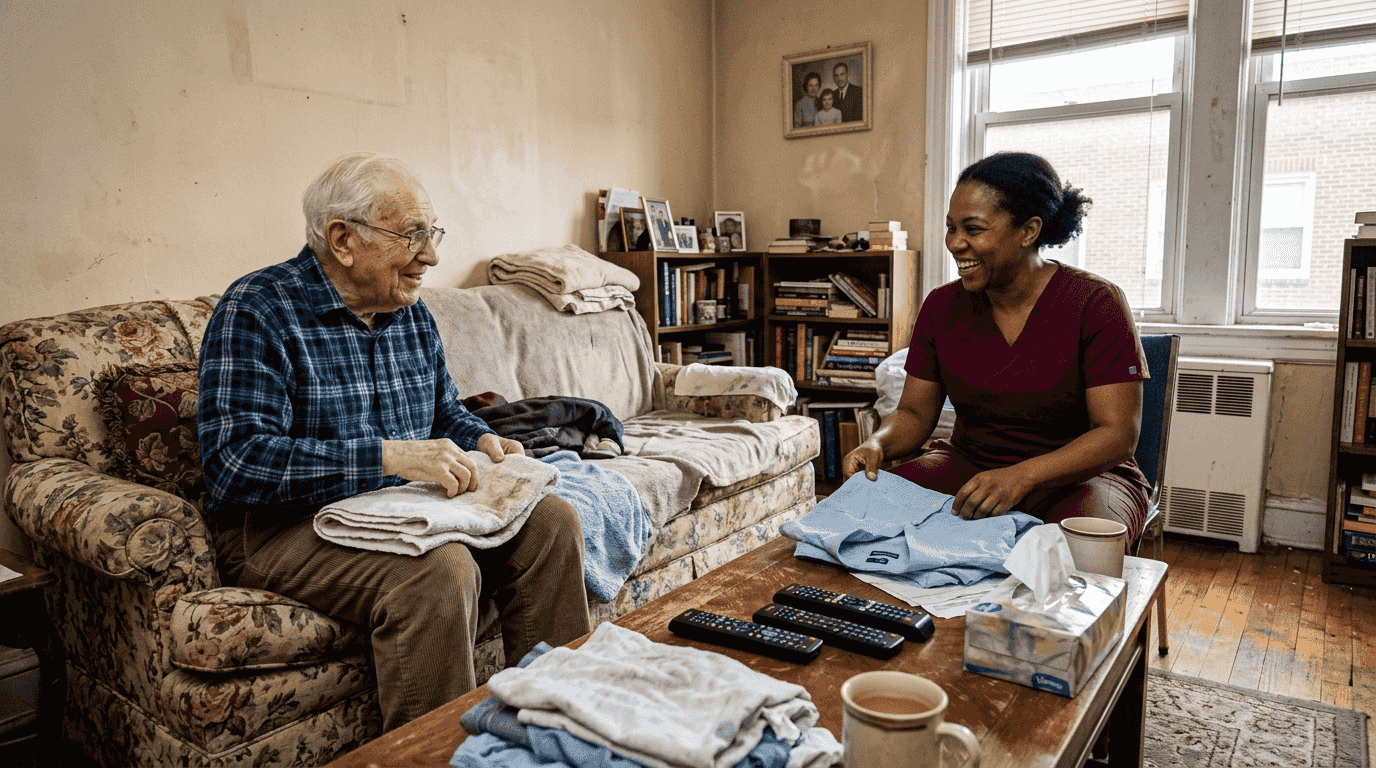
Families in NYC appreciate that starting home care services is straightforward when working with licensed agencies. You’ll discuss your loved one’s needs, schedule, and preferences, then receive a customized care plan. Caregivers are screened, trained, and supervised to ensure consistent quality. Supportive home services empower seniors to maintain independence while receiving the help they need to stay safe.
Pro Tip: Early planning for in-home care ensures smoother transitions and better tailored care. Don’t wait until a hospital discharge or crisis forces rushed decisions.
Comparing in-home care with nursing homes: costs and care quality
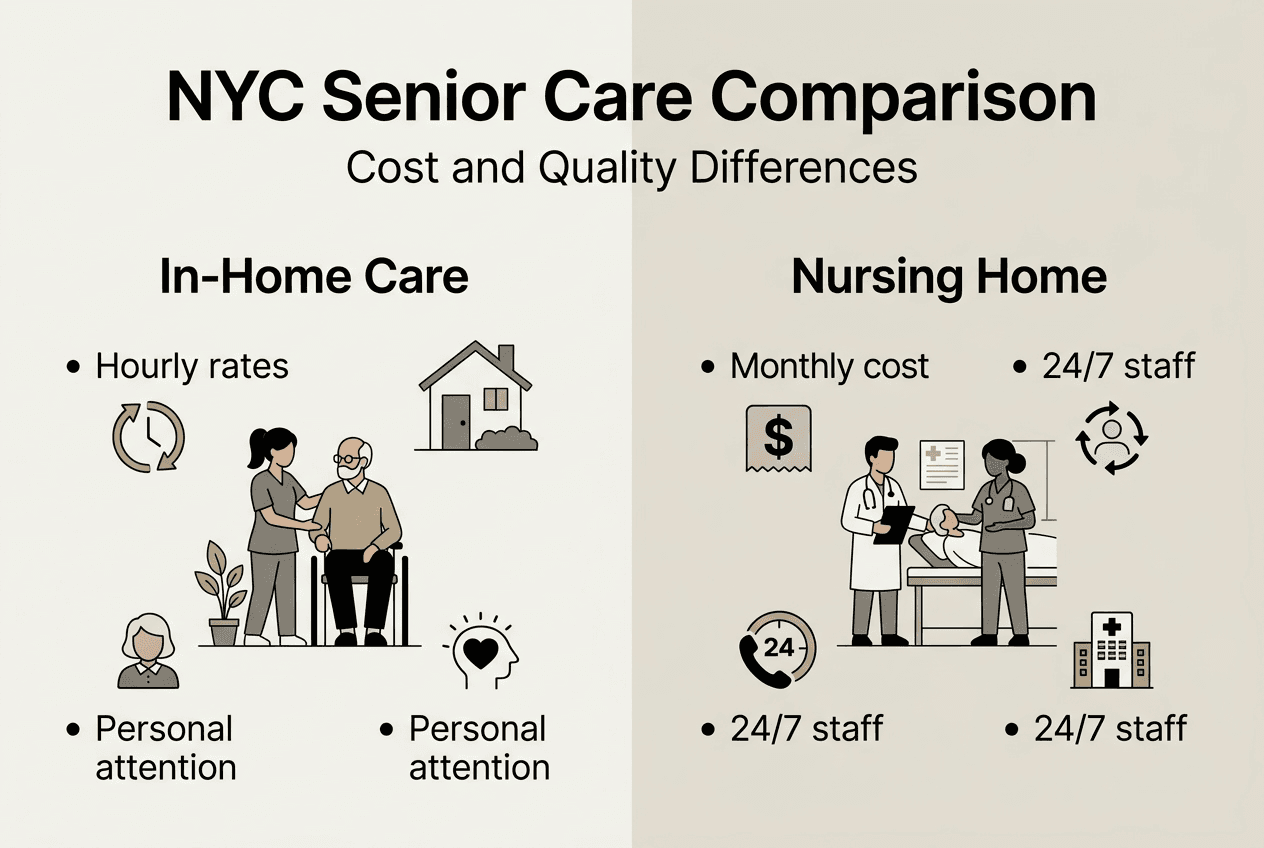
Cost is a major concern for NYC families, and understanding the financial landscape helps you make informed decisions. In-home care costs vary widely based on the level and hours of care required. Hourly rates for Licensed Home Care Services Agencies (LHCSAs) in New York typically range from $35 to $45 per hour. If you need 24/7 private care, costs can exceed $22,000 per month.
Nursing homes charge monthly rates that often surpass limited hourly home care. Semi-private nursing home rooms in New York average $12,000 to $15,000 per month, while private rooms can reach $18,000 or more. For seniors who only need a few hours of daily assistance, in-home care is far more economical.
Quality matters as much as cost. Home health agencies with high quality ratings reduce hospitalization rates and increase the number of days seniors live independently at home. Skilled caregivers recognize warning signs early, coordinate with physicians, and adjust care plans to prevent emergencies. This proactive approach keeps seniors healthier and out of hospitals.
Factor | In-Home Care | Nursing Home |
Typical cost | $35-$45/hour or $22,000+/month for 24/7 care | $12,000-$18,000+/month for full-time residency |
Care setting | Senior’s own home, familiar environment | Institutional facility, shared or private room |
Independence level | High, seniors maintain routines and autonomy | Lower, facility schedules and rules apply |
Quality indicators | High-rated agencies reduce hospital stays | Varies by facility, less personalized attention |
Medicaid coverage | Covers eligible in-home care hours | Covers nursing home care for eligible individuals |
Pro Tip: Investigate Medicaid eligibility early to ease care expense burdens. The application process takes time, and planning ahead prevents gaps in coverage.
Choosing between in-home care and nursing homes depends on medical needs, personal preferences, and financial resources. For seniors who value independence and don’t require constant medical supervision, in-home care offers superior quality of life at a potentially lower cost. Understanding financial considerations and exploring quality home care characteristics helps families make confident choices.
Financial assistance and planning for in-home care in New York City
Medicaid is the lifeline that makes long-term in-home care affordable for many New Yorkers. Unlike Medicare, which covers short-term skilled nursing and therapy but not long-term custodial care, Community Medicaid pays for ongoing personal care services that help seniors with daily living activities.
Eligibility depends on income, assets, and look-back period rules. In 2026, income limits are roughly $1,732 per month for a single individual, and countable assets must not exceed $31,175. These thresholds determine whether you qualify for Medicaid coverage of home care services. Certain assets, like your primary residence and one vehicle, are exempt from the calculation.
New York applies a 30-month look-back period when reviewing Medicaid applications. This means Medicaid examines financial transactions from the past 30 months to ensure applicants didn’t give away assets to qualify artificially. Transfers made during this window can result in penalties or delayed eligibility.
Planning trusts can protect assets, but they must be established well before care is needed. Irrevocable trusts, when set up properly and long before the look-back period, shield assets from Medicaid’s countable resource calculations. However, once assets are placed in such trusts, you lose direct control over them. Consulting an elder law attorney early ensures your estate plan aligns with Medicaid rules.
Medicaid Criteria | Details |
Income limit (2026) | Approximately $1,732/month for individuals |
Asset limit | $31,175 in countable assets (excludes home, one car) |
Look-back period | 30 months for asset transfers and gifting |
Coverage scope | Long-term personal care, not skilled nursing |
Application timeline | Can take 45-90 days, plan ahead |
Steps to apply for Medicaid and prepare financially:
Gather financial documents including bank statements, property deeds, and income records for the past 30 months.
Consult an elder law attorney to review asset protection strategies and ensure compliance with look-back rules.
Complete the Medicaid application through your local Department of Social Services or online portal.
Provide medical documentation demonstrating the need for home care services.
Follow up regularly with your caseworker to address any requests for additional information.
Once approved, coordinate with a licensed home care agency to begin services.
Pro Tip: Start the Medicaid application process as soon as you anticipate needing long-term care. Delays can leave families paying out of pocket while waiting for approval.
Understanding how to start home care services and exploring supportive home services empowers families to navigate financial and logistical challenges confidently. With Medicaid support, many NYC seniors can afford the in-home care that keeps them safe, independent, and connected to their communities.
Explore compassionate home care services in New York City
Friendly Home Care understands the unique challenges NYC families face when caring for aging loved ones. Our personalized home health services are designed to meet diverse senior needs across Brooklyn, Queens, Manhattan, the Bronx, Staten Island, and Westchester County. We focus on compassionate, culturally competent care delivered by multilingual home health aides who respect each client’s background and preferences.
Whether your loved one needs a few hours of daily assistance or around-the-clock support, our expert caregivers help maintain independence while ensuring safety and comfort at home. We handle personal care, medication reminders, meal preparation, companionship, and mobility support with professionalism and warmth. Visit Friendly Home Care NYC to learn how we tailor care plans to your family’s specific needs and schedule a consultation today.
Frequently asked questions about seniors and in-home care
What services does in-home care include?
In-home care includes personal care assistance such as bathing, dressing, grooming, and toileting, as well as homemaking services like meal preparation, light housekeeping, and laundry. Caregivers also provide medication reminders, companionship, mobility support, and help with errands. Services are customized to each senior’s needs and can range from a few hours per week to 24/7 care.
How do I qualify for Medicaid to help pay for home care?
To qualify for Community Medicaid in New York, you must meet income and asset limits, which in 2026 are approximately $1,732 per month and $31,175 in countable assets for individuals. Medicaid also reviews financial transactions from the past 30 months to ensure no improper asset transfers occurred. You’ll need to provide financial and medical documentation demonstrating the need for long-term personal care services.
Is in-home care more affordable than nursing homes?
For seniors who need limited daily assistance, in-home care is often more affordable than nursing homes. Hourly rates for home care range from $35 to $45, while nursing homes charge $12,000 to $18,000 or more per month for full-time residency. Even 24/7 in-home care, which can exceed $22,000 monthly, may offer better value and quality of life for those who prefer staying home.
Can in-home care providers support culturally diverse seniors?
Yes, reputable home care agencies in NYC provide multilingual caregivers who speak languages such as Spanish, Mandarin, Russian, Haitian Creole, and many others. Culturally competent care respects each senior’s traditions, dietary preferences, and communication styles, building trust and ensuring effective support. Over 60% of NYC seniors identify as non-white, making this capability essential.
How can I start home care services for my loved one?
Start by contacting a licensed home care agency to discuss your loved one’s needs, schedule, and preferences. The agency will assess the situation, create a customized care plan, and match you with trained, screened caregivers. If using Medicaid, begin the application process early, as approval can take 45 to 90 days. Early planning ensures smooth transitions and better care outcomes.
Recommended